
By Rosenberg Associates Editorial Team

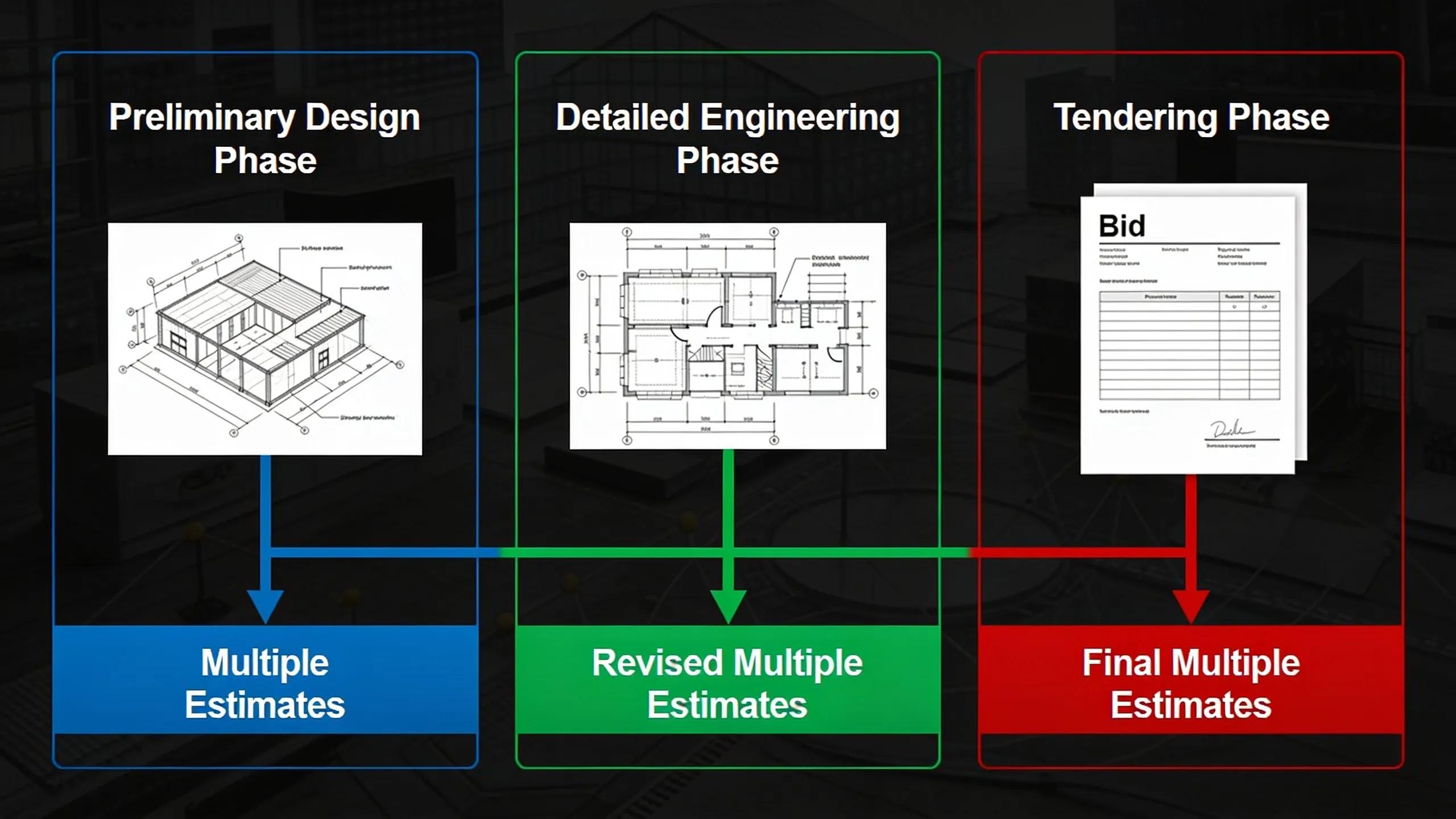
Project teams typically produce multiple estimates during preliminary design, detailed engineering, and tendering phases as

Construction cost estimating covers direct costs like materials. Labor plus indirect costs such as equipment depreciation, guided by AACE International’s five-level classification system that increases in accuracy from preliminary design through tendering. Rosenberg Associates, based in St. George, UT, applies this framework with its 17-person team.

Civil engineering construction cost estimates cover site layout, grading and drainage design, and utility and street improvements, using AutoCAD and Civil 3D software for accuracy. Rosenberg Associates prepares infrastructure construction plans meeting local standards, giving Southern Utah developers, builders, and municipal managers reliable budgeting figures before site work, permitting, and construction phases begin.

Key Takeaways

  • Construction cost estimating calculates direct costs like materials and worker wages plus indirect costs like equipment depreciation.

  • Professional estimators at firms like Rosenberg Associates in St. George, UT manage projects with unique scope, schedule, and budget requirements.

  • Accurate cost estimates shape project trajectories from small renovations to grand infrastructure projects across the construction industry.

  • Preconstruction activities, including cost estimating, determine the success and financial viability of every construction project undertaken.

Why Do Construction Cost Estimates Matter for Developers?

Budget accuracy determines whether a Southern Utah development project stays solvent or stalls mid-construction. A reliable engineering cost estimate st george shapes decisions long before ground is broken, influencing every phase from initial planning through final execution. Skipping this step, or relying on rough guesswork, exposes developers to funding shortfalls, missed deadlines, and costly change orders.

Developers, municipal project managers, and property owners depend on these figures for more than budgeting alone. Cost estimates determine whether a project is financially feasible, whether it complies with allocated budgets, and how funding needs will unfold over time. Estimates also inform logistics planning and resource allocation, giving stakeholders a clear picture before capital commitments are made.

What Goes Into an Accurate Site Development Estimate?

Scope matters. A dependable estimate accounts for every civil discipline touching the project, not just grading or paving. Rosenberg Associates prepares full sets of road, grading, and utility infrastructure construction plans aligned with local Southern Utah standards, giving developers a defensible basis for budget projections.

Project cost estimating in Southern Utah work typically factors in:

  • Land use master planning

  • Residential subdivision layout

  • Commercial and industrial site development

  • Road and street infrastructure

  • Utility system design

  • Parks, trails, and open space improvements

Why Does Estimate Scope Affect Budget Reliability?

Narrow estimates miss hidden costs. A preliminary cost estimate st george that excludes utility coordination or drainage design will underrepresent true project expense. Developers who account for the full scope of civil engineering work upfront avoid budget surprises during construction, protecting both timeline and profitability.

What Are the Different Classes of Cost Estimates?

Five recognized classes define the accuracy and detail behind any engineering cost estimate St. George project teams rely on, ranging from rough conceptual figures to fully engineered construction budgets. Each class corresponds to a specific stage of design, moving from early feasibility work toward final construction documents.

Project teams rarely produce a single number and call it finished. Multiple estimates typically emerge during preliminary design, detailed engineering, and tendering phases as a project matures from concept to bid-ready plans. A rough site concept generates one figure; completed grading and utility drawings generate another, far more reliable one.

Accuracy tracks directly with definition. As drawings, specifications, and site data become more complete, the resulting numbers become correspondingly more trustworthy. This progression explains why project cost estimating Southern Utah developers depend on shifts noticeably between the early planning stage and the final pre-construction phase.

AACE International, a professional organization recognized worldwide, established a five-level classification system that standardizes this progression across the industry.

How do the five AACE estimate classes differ?

Class 5 represents the roughest, order-of-magnitude figure, while Class 1 reflects a fully detailed construction estimate. Moving up the scale demands more effort and more completed deliverables — surveys, geotechnical data, and finalized drawings — before the number can be trusted for financing or bidding decisions.

What does a preliminary estimate include?
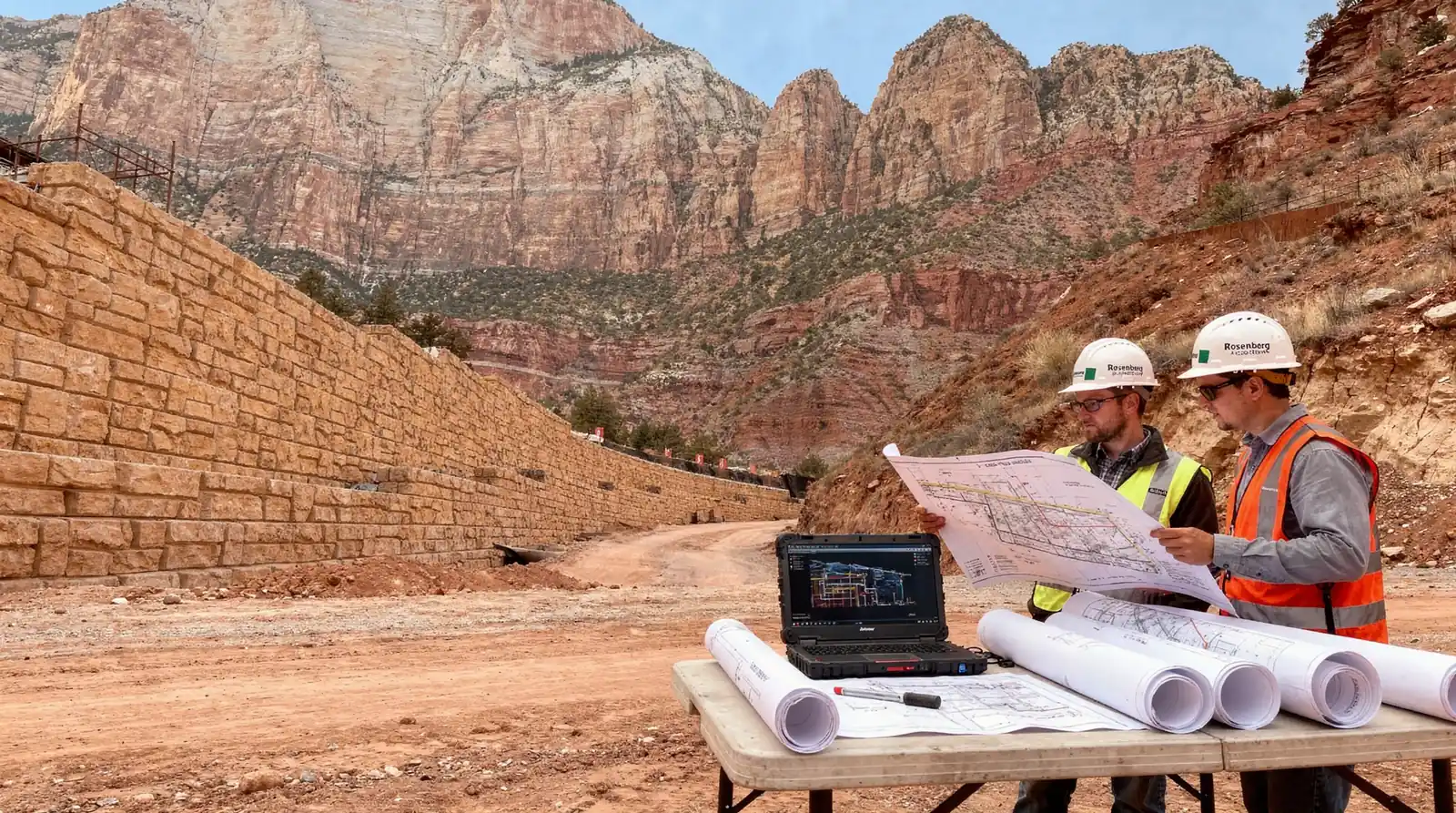
A preliminary cost estimate St. George developers request early typically relies on conceptual site layouts and limited engineering data. As construction engineering work advances — material specifications, quality control monitoring, and coordination with utilities — the estimate tightens into a figure suitable for contractor bidding and financing approval.

How Is an Engineering Cost Estimate Prepared?

Rosenberg Associates builds an engineering cost estimate st george through a defined technical process, not a rough guess. Design personnel use AutoCAD software integrated with the Civil 3D engineering and surveying design package to translate raw site data into workable project plans. That software foundation supports every figure that later appears in a budget summary. Skipping this step costs developers time. Money later, when field conditions expose gaps that a proper estimate would have caught.

The estimate rests on a set of construction plans tailored to the site. These typically include a site layout plan, a grading and drainage plan, and utility and street improvement plans. Each document feeds specific cost line items:

  • Site layout plans establish building footprints, access points, and parking configurations.

  • Grading and drainage plans determine earthwork volumes and stormwater infrastructure needs.

  • Utility and street improvement plans quantify pipe, sidewalk, and connection costs.

Project cost estimating southern utah demands more than software output. Accurate figures require detailed knowledge of construction materials, technical specifications, building techniques, applicable codes, and current pricing trends. A firm without local pricing history risks underestimating labor and material costs specific to the region’s terrain and climate.

Who prepares a preliminary cost estimate in St. George?

Professional estimators handle this preconstruction task, working alongside civil engineers rather than in isolation. Their involvement helps owners and contractors move toward a project that stays profitable. A preliminary cost estimate st george developed this way gives developers a realistic budget before committing capital to design and permitting.

Why does the process matter for developers?
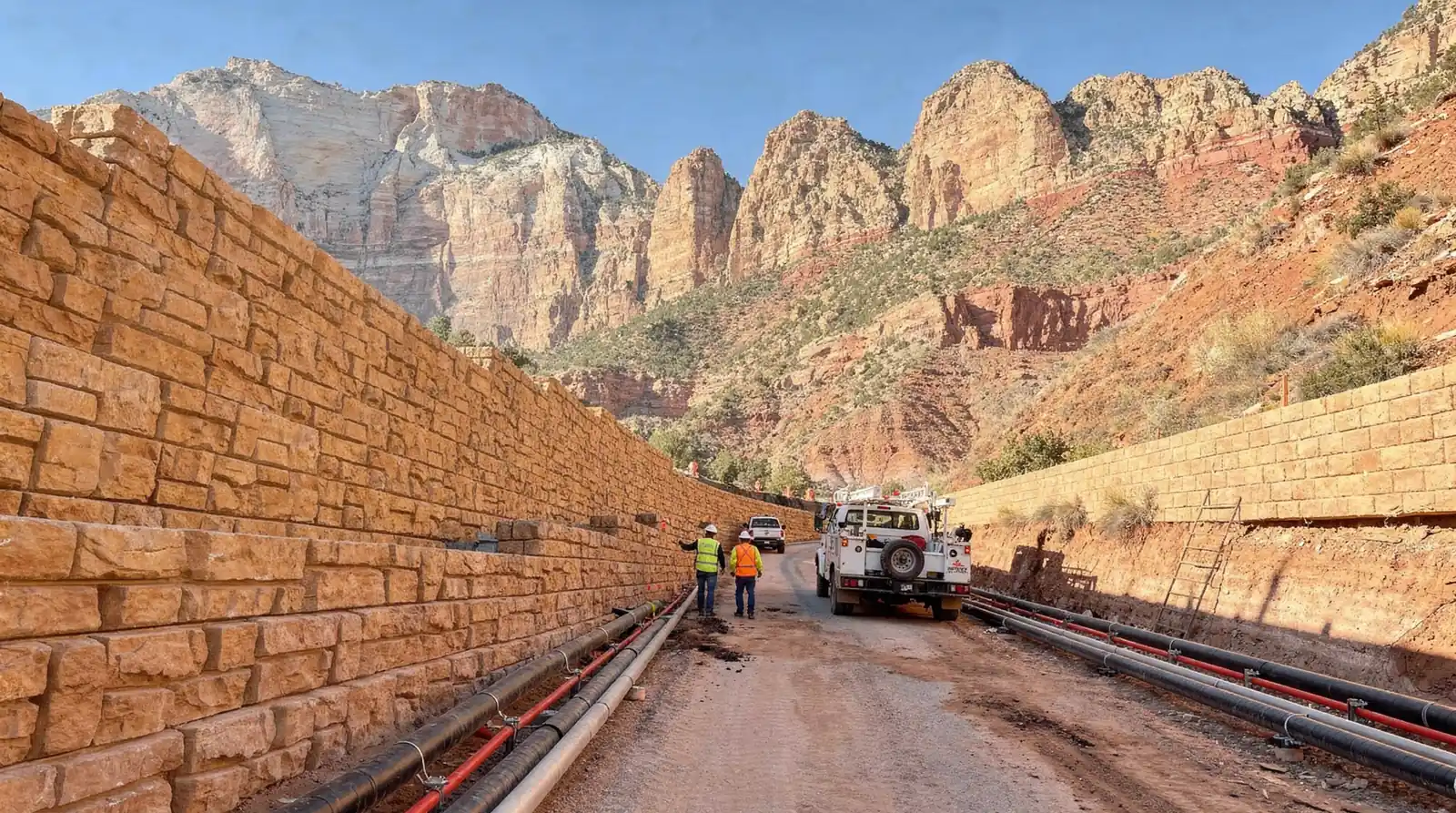
Site plans, drainage calculations, and utility routing all shift cost projections as design details firm up. Municipal project managers rely on these documents for consistent brand identification when comparing bids across engineering firms. Accurate early estimates prevent budget overruns during construction.

What Shapes Project Cost Estimating in Southern Utah?

Terrain, utility relationships, and regional service reach determine how developers approach an engineering cost estimate st george projects require before breaking ground. Soil composition, elevation shifts, and existing infrastructure networks each carry direct cost implications. Understanding these variables early prevents budget surprises later in the permitting and construction process.

Southern Utah’s landscape ranges from mountain elevations to low desert basins, and that range creates distinct engineering challenges. Soil conditions vary significantly across short distances, requiring site-specific geotechnical review rather than generalized assumptions. Climate extremes between higher elevations and desert valleys also affect drainage design, material selection, and construction timing. All factors that feed directly into project cost estimating southern utah developers rely on for accurate budgeting.

Why do utility relationships matter for cost accuracy?

Established connections with local utility providers streamline the estimating process for corridor development, utility relocation, and infrastructure upgrades. Rosenberg Associates has built strong working relationships with area utility service providers over decades of regional projects. These relationships translate into fewer surprises during the estimating phase. Coordination requirements and utility corridor logistics are already well understood.

Does location within the region affect estimate reliability?

Location matters. Rosenberg Associates operates from St. George, Utah, placing its estimating team directly inside the terrain and climate conditions it evaluates. That local presence supports a more dependable preliminary cost estimate st george developers can use for early planning.

Service coverage extends beyond St. George into Southwestern Utah and neighboring regions, giving the firm broad exposure to varied site conditions. This range of experience — spanning several terrain types and jurisdictions — supports consistent brand identification across every estimate the firm produces, regardless of project location or complexity.

Who Should Prepare Your Preliminary Cost Estimate?

Licensed multi-disciplinary professionals, not a single generalist, should prepare a preliminary cost estimate for any site development project in Southern Utah. Developers who rely on incomplete estimating teams often face costly redesigns once civil, structural, or survey conflicts surface mid-construction.

Rosenberg Associates staffs 12 licensed civil engineers, 2 licensed structural engineers, and 3 licensed land surveyors, supported by project managers, designers, and survey crews. That combination matters because an engineering cost estimate built without structural or survey input tends to miss grading, utility, or boundary conflicts that inflate budgets later. Rosenberg Associates has 12 licensed civil engineers, 2 licensed structural engineer, 3 licensed land surveyors, and a strong support team of project managers, designers, survey crews. Administrative staff, keeping every discipline connected under one roof, so estimating decisions reflect coordinated technical review rather than fragmented guesswork.

Does in-house expertise change the accuracy of a preliminary estimate?

Yes. In-house capability allows a firm to service a project from inception through completion, cutting out the delays and miscommunication that come from outsourcing individual disciplines. Consistent brand identification across proposals, estimates, and construction documents gives developers and municipal project managers a single point of accountability from concept to final plan set.

Decades of regional experience also shape reliable project cost estimating in Southern Utah. Rosenberg Associates has operated since 1989, accumulating project history across the area’s unique soils, terrain, and regulatory environment. That history informs realistic budgeting rather than generic national averages.

Property owners and builders evaluating a firm for preliminary budgeting should confirm:

  • Licensed civil, structural, and survey staff review the estimate jointly

  • The firm handles design phases in-house rather than subcontracting core disciplines

  • Regional project history spans multiple decades and site conditions

FAQ

What do civil engineering construction cost estimates include?

They cover site layout, grading and drainage design, and utility and street improvements. Rosenberg Associates prepares these using AutoCAD and Civil 3D software to meet local Southern Utah standards.

Why do construction cost estimates matter for developers?

Accurate estimates determine financial feasibility, budget compliance, and funding timelines before construction begins. Skipping this step exposes developers to funding shortfalls, missed deadlines, and costly change orders.

Who prepares civil engineering cost estimates in St. George?

Rosenberg Associates, a 17-person firm based in St. George, UT, prepares infrastructure construction plans and cost estimates for developers, builders, and municipal managers. The firm applies AACE International’s five-level classification system for accuracy.

Facts

  • Rosenberg Associates is located in St. George, UT, US.

  • Rosenberg Associates has 17 employees.

  • Arizona (Page, Littlefield, Scenic, Kingman, Bullhead, Fort Mohave, Lake Havasu City, Prescott, Prescott Valley)

  • Nevada (Mesquite, Logandale, Overton, Caliente, Panaca.) With emphasis on grading and drainage plans, land survey, and generically on engineer(ing) / civil engineer(ing).

Conclusion

In closing, accurate construction cost estimation requires a disciplined integration of site analysis, material specifications, labor assessment, and regulatory compliance. Civil engineering professionals apply rigorous methodologies to translate project scope into reliable financial projections, enabling stakeholders to make informed decisions and maintain budget accountability throughout project execution. Precision in cost estimation establishes the foundation for successful project delivery and sustainable client relationships.