
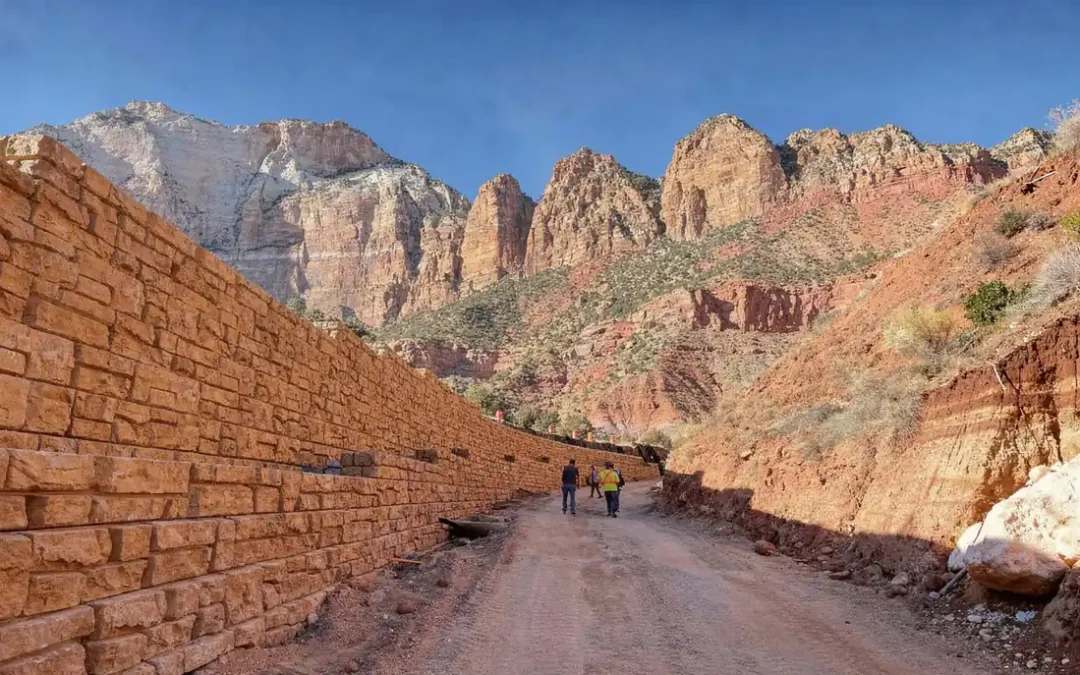
Geotechnical and materials testing in St. George addresses problem soils, including expansive, collapsible, and undocumented fill conditions. Rosenberg Associates collects and tests soil samples in an in-house laboratory, identifies geologic hazards, and delivers findings through a geotechnical report with design recommendations designed for Southern Utah’s terrain and development requirements.

Key Takeaways

  • Rosenberg Associates delivers geotechnical and materials testing services with rigorous QC/QA standards throughout St. George.

  • Our team of 17 professionals provides site-specific geotechnical recommendations and sound project design parameters for construction projects.

  • We reduce client liability through comprehensive quality control and quality assurance programs on every project.

  • Rosenberg Associates solves complex geotechnical problems while maintaining environmental compliance and on-time project delivery.
Why Does St. George Soil Demand Specialized Testing?

St. George sits atop a mix of expansive clays, collapsible soils, and soluble gypsum deposits that shift and settle unpredictably under load. These conditions turn routine foundation work into a liability risk without proper analysis. Southern Utah’s terrain combines desert geology with seasonal moisture swings, creating subsurface behavior that differs sharply from stable, uniform soil regions elsewhere in the country.

Developers and contractors who skip geotechnical services on St. George projects often discover problems only after concrete cracks or slabs heave. Problem soil conditions, including expansive, collapsible, soluble, wet, undocumented fill, and buried debris, show up repeatedly across the region. Identifying these hazards before design finalizes protects budgets and timelines alike.

St. George soil testing firms in Southern Utah typically draw on decades of combined regional experience. Firms serving the broader Utah market point to combined geotechnical and materials testing experience as a baseline credential. That depth of local history, paired with knowledge of Southern Utah’s terrain and climate patterns, shapes recommendations that generic national standards cannot replicate.

What Do Geotech Borings Reveal Before Construction Begins?

Geotech borings: St. George, UT crews collect and expose soil layering, moisture content, and bearing capacity at specific depths. This data feeds directly into foundation design, slope stability calculations, and sidewalk planning.

A local geotechnical engineer st george developers consult understands which neighborhoods carry expansive clay risk versus collapsible fill. Geotechnical engineering reports supply the subsurface condition data that developers and municipal reviewers rely on before approving site plans. Understanding what geotech services St. George project teams need- soil sampling, hazard identification, foundation recommendations, groundwater evaluation- comes down to one factor: matching analysis to the region’s distinct geology.

What Geotechnical Services Does Rosenberg Associates Provide?

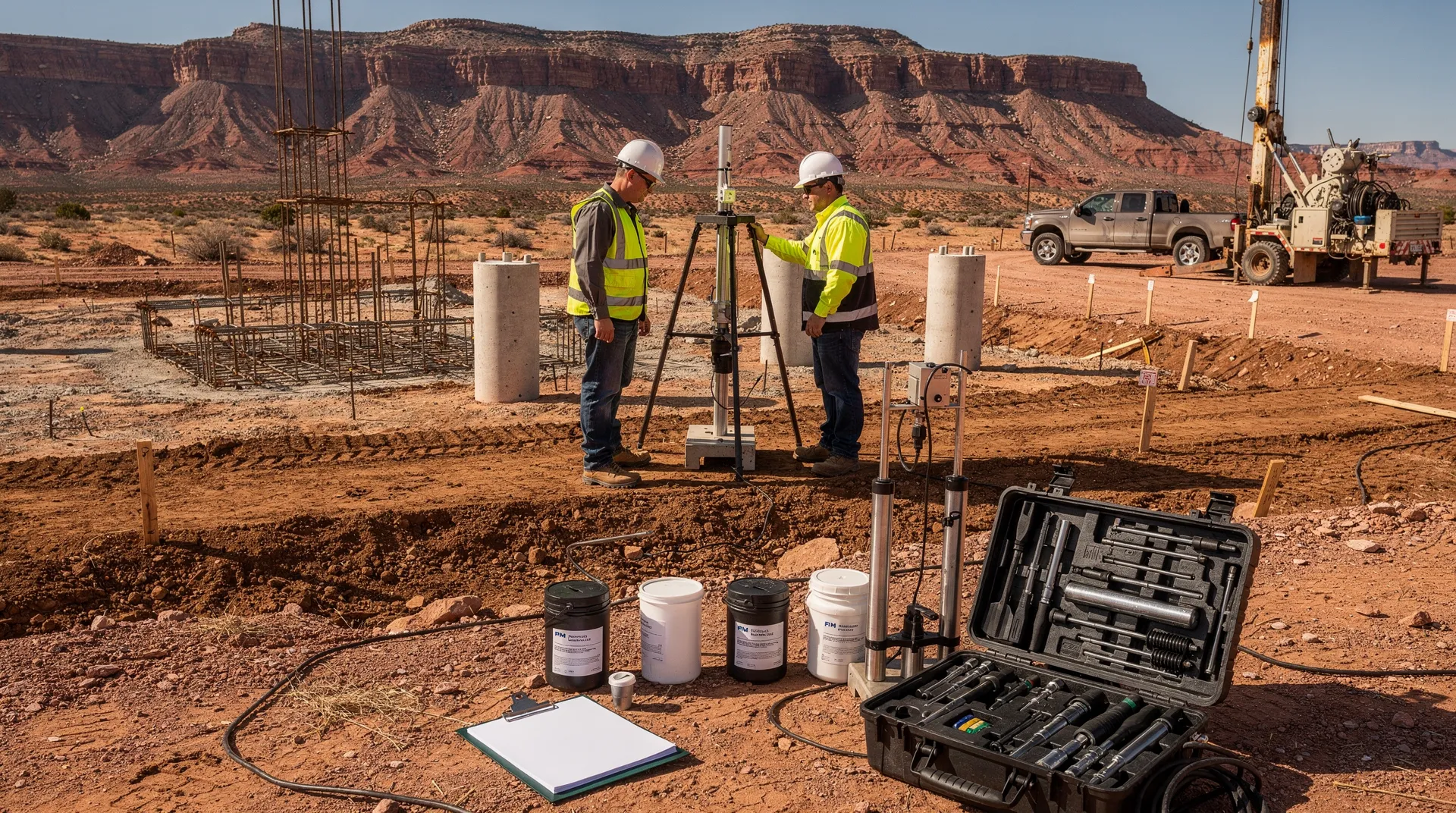
Rosenberg Associates delivers geotechnical services st george developers and contractors rely on to characterize soil before design work begins. Samples collected from a St. George project site travel to an in-house laboratory for testing, where engineering geology gets documented and geologic hazards get identified. Findings arrive in a formal geotechnical report with site-specific design recommendations attached, giving project teams a clear technical foundation rather than guesswork.

This foundation extends into st george soil testing southern utah projects through a broader set of related disciplines. Groundwater source identification and control sit alongside engineering geology and geologic resource evaluation. Percolation testing and septic system design round out the offering for parcels without municipal sewer access, a common condition on undeveloped land around St. George.

What does geotechnical design work actually cover?

Design scope reaches well beyond a soil report. Rosenberg Associates addresses site investigation, foundation engineering, and the stability of earth slopes and embankments. The firm also handles retaining and buried structures, soil improvement, distress investigations, and sidewalk engineering, each informed by field and lab data specific to the project site.

Do geotech borings reveal more than just soil type?

Yes. Geotech borings for St. George, UT projects depend on more than classification. They establish bearing capacity, expose moisture conditions, and flag hazards that affect foundation and sidewalk decisions before construction begins.

Environmental due diligence rounds out the service list. Rosenberg Associates performs Transaction Screening Assessments. Phase I Environmental Site Assessments on undeveloped property, supporting land acquisition and planning decisions. cite-1
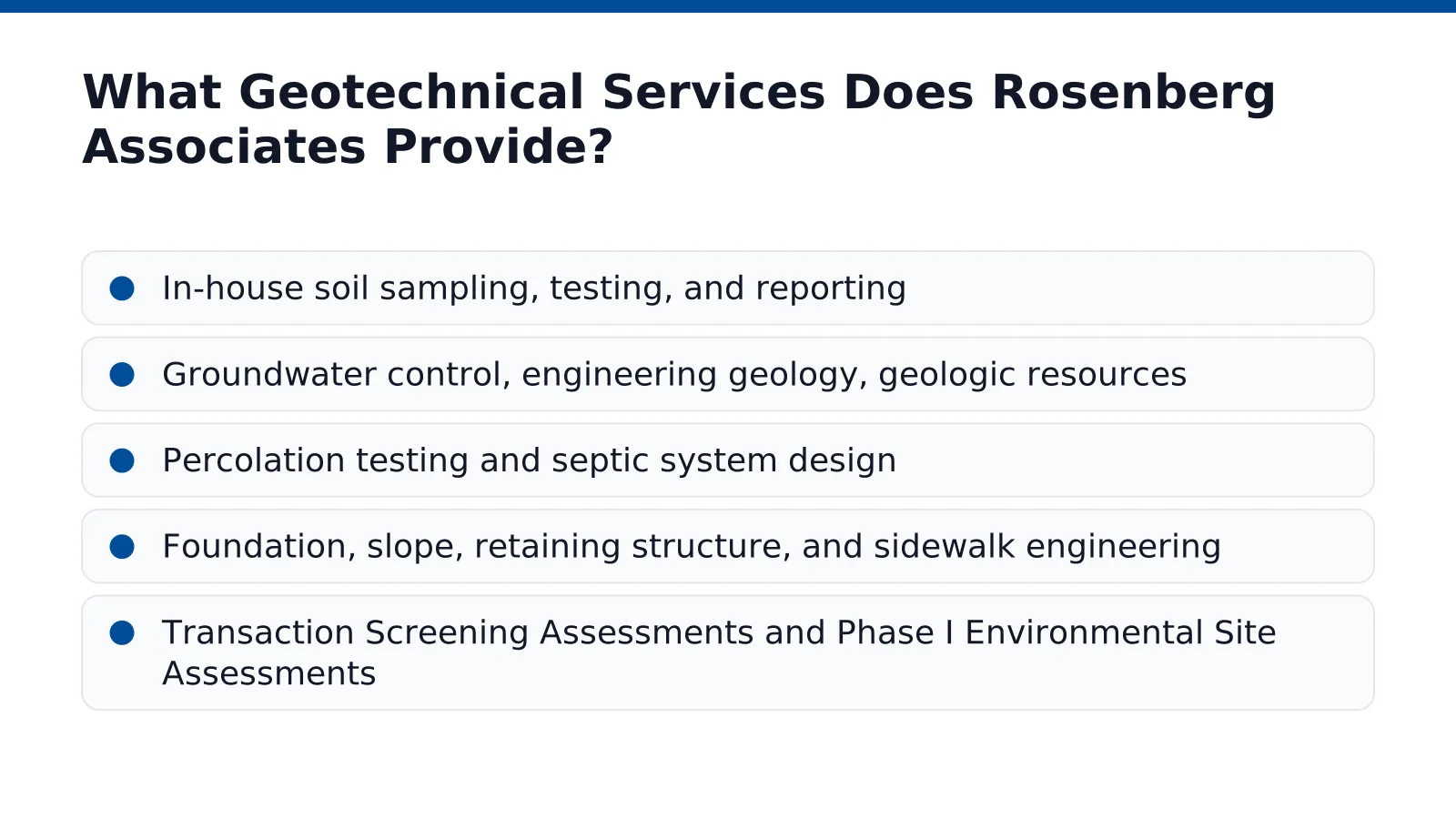
  • In-house soil sampling, testing, and reporting

  • Groundwater control, engineering geology, geologic resources

  • Percolation testing and septic system design

  • Foundation, slope, retaining structure, and sidewalk engineering

  • Transaction Screening Assessments and Phase I Environmental Site Assessments

For developers seeking a local geotechnical engineer in St. George to coordinate with directly, this range of services covers the full scope of what geotech services include that St. George projects typically demand, from first boring to final design sign-off.

How Do Geotech Borings and Lab Testing Work?

Subsurface testing begins with a site investigation that pinpoints boring locations and depths across a St. George parcel. This stage sets the foundation for every recommendation that follows, from footing design to sidewalk sections. Soil conditions beneath St. George’s terrain vary sharply within short distances, so boring placement determines whether a report actually reflects what sits beneath a slab or roadway.

Borings alone rarely tell the full story. Geotech borings for St. George, UT projects typically pair drilled samples with forensic, non-destructive, and destructive testing methods to build a complete subsurface picture. Destructive testing confirms material strength directly. Non-destructive methods map conditions without disturbing the site, a useful combination when developers need answers fast without delaying excavation schedules.

What tools supplement traditional borings?

Ground-penetrating radar, thermal imaging, and impact echo testing extend what a boring log alone can show. These tools detect buried utilities, voids, and layering anomalies that a single borehole might miss entirely. For commercial sites with existing infrastructure, this layered approach reduces the risk of costly surprises during grading or foundation work.

What happens to samples after collection?

Once collected, soil and material samples move to a certified lab for field testing covering all major construction materials found on site. This is where St. George soil testing Southern Utah projects get their technical teeth: moisture content, compaction density, and bearing capacity all get measured against engineering standards before design work proceeds.

For developers and municipal managers evaluating geotechnical services in St. George, understanding this testing sequence clarifies why thorough investigation protects budgets and timelines downstream. A qualified local geotechnical engineer St. George partner handles both phases, drilling and lab verification, under one coordinated scope.

Why Choose a Local St. George Geotechnical Engineer?

Proximity to project sites separates a qualified local geotechnical engineer st george developers can rely on from an out-of-area consultant working off generalized data. Rosenberg Associates operates as a locally owned and operated consulting engineering firm based in Southern Utah, keeping technical staff close to active job sites rather than hours away. The firm has built decades of continuous engineering practice within the communities it serves.

Local presence matters most once subsurface conditions turn unpredictable. St. George’s expansive clays, caliche layers, and variable bedrock demand firsthand familiarity, not regional averages pulled from unrelated terrain. A firm headquartered directly in St. George, UT keeps its geotechnical services st george project teams positioned to respond quickly when field conditions shift mid-excavation.

What does local geotechnical experience actually provide?

Local experience translates into faster mobilization for st george soil testing and Southern Utah projects and tighter coordination with site crews. A 17-person team brings decades of combined experience across project managers. Technical disciplines support everything from geotech borings in St. George, UT programs to foundation design review.

What do geotech services include for St. George-area projects?

Scope varies by site, but understanding what geotech services include in St. George engagements typically helps developers plan accordingly:

  • Subsurface soil sampling and in-house laboratory testing

  • Geologic hazard identification and engineering geology review

  • Foundation and earth slope design recommendations

  • Boring logs, laboratory data, and final geotechnical reporting

Developers, contractors, and municipal project managers benefit from one accountable team overseeing each phase, from initial borings through final report delivery. Choosing a firm rooted in St. George reduces coordination delays and keeps project decisions grounded in local soil realities. Contact Rosenberg Associates to discuss project-specific geotechnical needs.

Ready to Schedule Geotechnical Testing in St. George?

Scheduling begins with a direct conversation about project scope, site conditions, and timeline. Rosenberg Associates’ geotechnical services that St. George developers rely on cover every phase of a project, from initial soil investigation through final construction oversight. That continuity matters: a firm managing a project from inception to completion reduces miscommunication between design and field teams, a common source of costly delays on commercial and residential sites alike.

Clients gain access to a full engineering roster under one roof. Rather than coordinating separate firms for civil, structural, survey, geotechnical, environmental, and construction work, project managers work with a single point of contact spanning all these disciplines, including river and floodplain management. This structure simplifies permitting conversations and keeps design assumptions consistent across every phase of a build.

What does a local geotechnical engineer in St. George actually provide?

A local geotechnical engineer in St. George evaluates subsurface soil behavior, identifies site-specific risks, and translates findings into actionable design recommendations. This work typically includes geotech borings that St. George, UT projects require to characterize soil layers, bearing capacity, and groundwater conditions before foundation design begins.

Who handles the testing and analysis?

A dedicated team of professionals leads clients through complex geotechnical challenges, from st george soil testing southern utah developers need to final reporting. Understanding what geotech services include, St. George project leads should expect that it starts with that conversation. Project managers ready to move forward should contact Rosenberg Associates directly to discuss site-specific scheduling and scope.

FAQ

Why does St. George soil require specialized geotechnical testing?

St. George sits on expansive clays, collapsible soils, and soluble gypsum deposits that shift unpredictably under load. Skipping proper analysis creates liability risk, with problems often surfacing only after concrete cracks or slabs heave.

What does Rosenberg Associates do with soil samples?

Rosenberg Associates collects samples from the project site and tests them in an in-house laboratory in St. George. Engineering geology gets documented, geologic hazards get identified, and findings arrive in a formal geotechnical report with design recommendations.

What information do geotech borings provide before construction?

Geotech borings expose soil layering, moisture content, and bearing capacity at specific depths. This data feeds directly into foundation design, slope stability calculations, and sidewalk planning for the project.

Conclusion

In closing, geotechnical and materials testing form the technical foundation upon which sound engineering decisions rest. Rosenberg Associates integrates in-house soil analysis, hazard identification, and comprehensive subsurface evaluation into every project phase, ensuring that site conditions inform design strategy from inception through construction. This disciplined approach to subsurface characterization protects project viability, regulatory compliance, and long-term structural performance across the diverse terrain of Southern Utah and surrounding regions.