
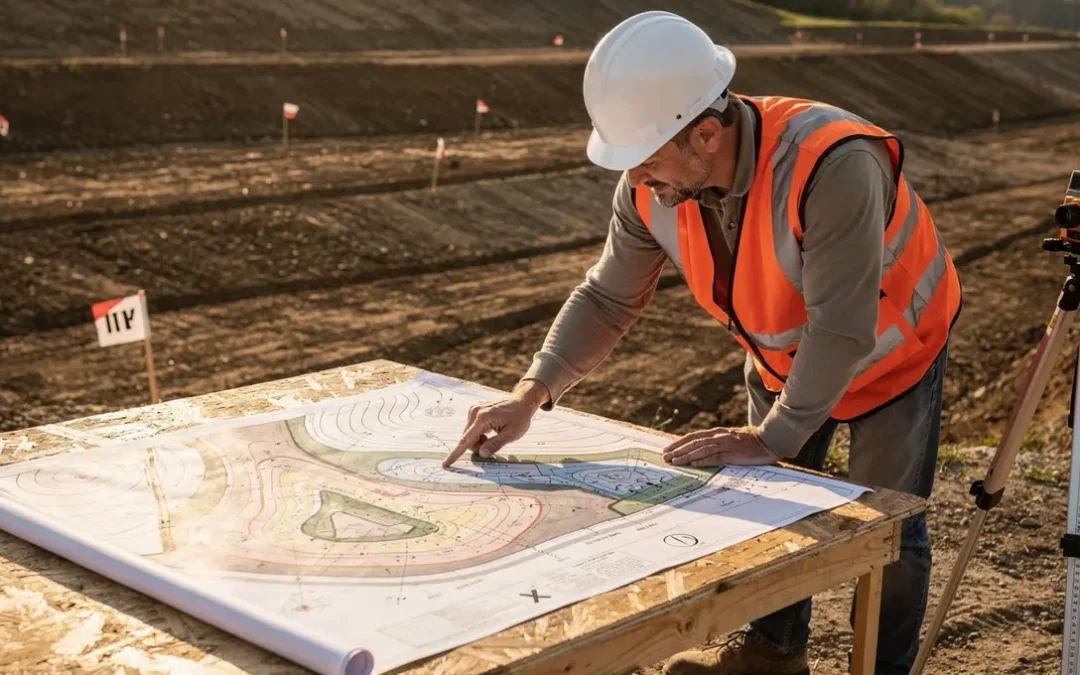
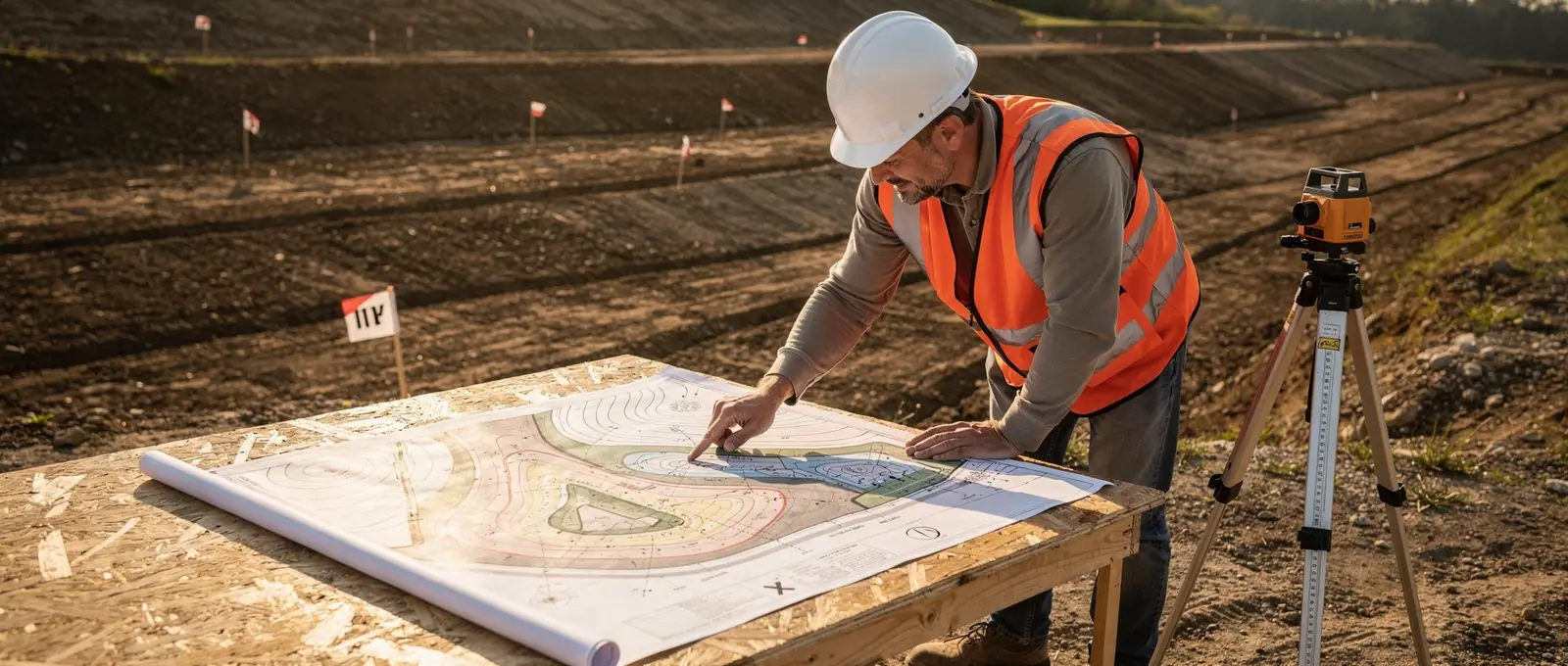
Grading design for these stamped civil engineering plans supports single-family homes, commercial sites, and industrial parks. The 17-person team applies AACE International’s classification system to ensure precise earthwork calculations and regulatory compliance across Southern Utah projects.

Key Takeaways

  • The team applies AACE International’s classification system to ensure precise earthwork calculations and regulatory compliance.
  • Proper site layout and surface water management determine whether a development functions safely for decades or fails within the first storm season.
  • Without deliberate grading, developers absorb costs from erosion, flooding, and structural damage that proper planning prevents.

Why is grading design critical for your project?

Grading design establishes the foundation for every successful construction project. Civil engineering services encompass a wide range of functions essential for the planning, design, and execution of construction projects. Effective grading and drainage plans are critical for maintaining the health and functionality of a property. Poor surface water control undermines foundations, saturates soils, and creates liability for adjacent parcels. Rosenberg Associates has delivered engineering excellence for decades, serving Southern Utah clients with locally grounded expertise.

What happens when site grading is neglected?

Neglected grading produces measurable failures including water pooling against foundations, erosion cutting through finished slopes, and uneven utility trench settlement. Each failure compounds the next, turning minor oversights into expensive remediation.

How does grading design protect long-term site value?
Stormwater grading directs runoff away from structures and toward controlled discharge points. Site grading solutions balance cut and fill volumes to minimize earthwork costs while preserving natural drainage patterns. Developers who invest in proper grading avoid the recurring expense of repairing water damage after every significant rainfall.

Rosenberg Associates applies decades of regional experience to each project. The company’s commitment to engineering excellence ensures that how to design site drainage becomes a solved problem, not an ongoing liability.

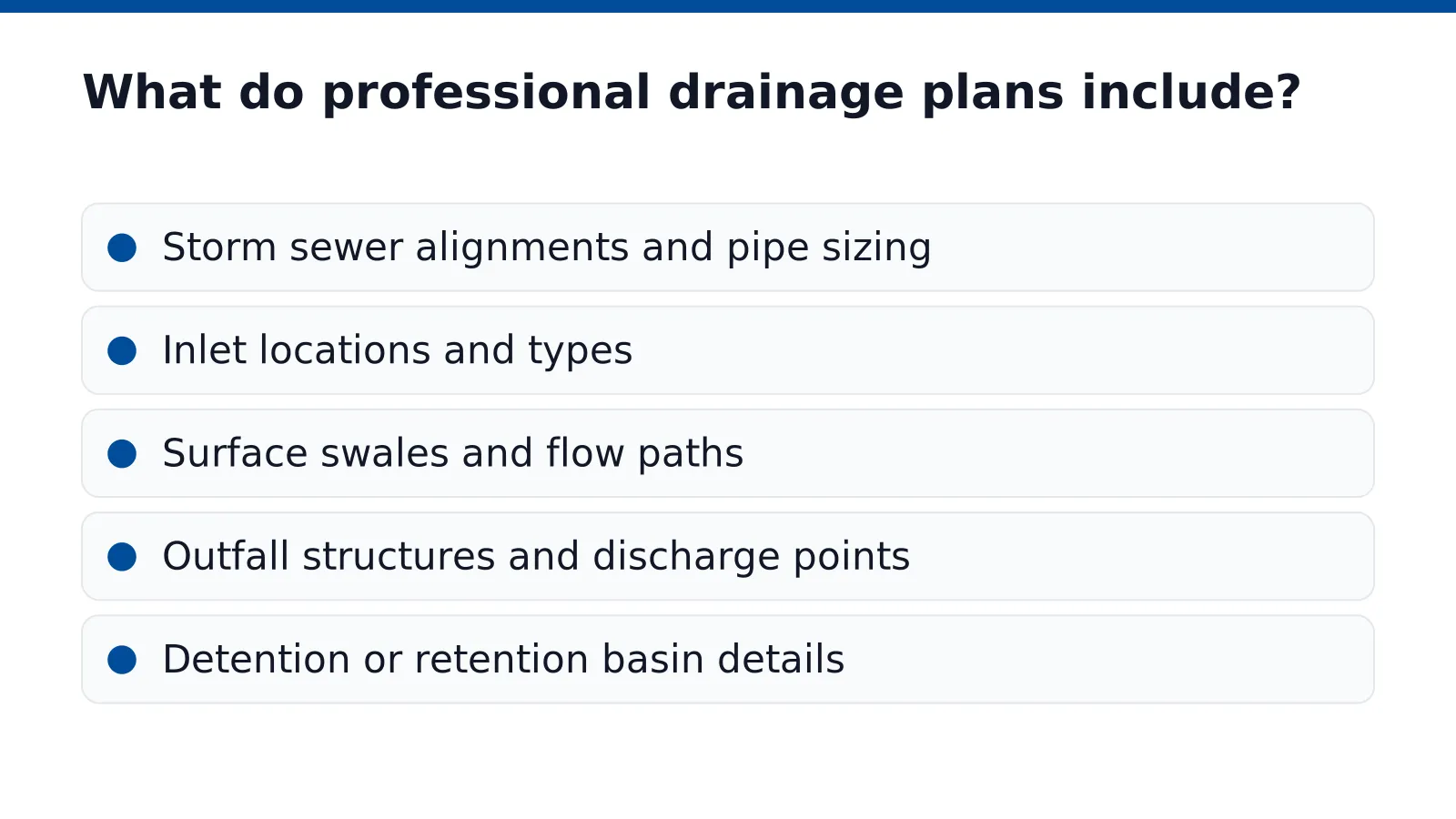
What do professional drainage plans include?

Professional drainage plans document how stormwater moves across a site, detailing conveyance systems, storage, and discharge points. A drainage plan maps storm sewer alignments, inlets, swales, and outfalls to control runoff and prevent flooding. Without stamped drainage plans, developers risk construction delays and post-construction water damage that erodes property value.

Rosenberg Associates integrates drainage plans with broader civil engineering services. The firm’s scope covers site layout, grading and drainage design, utility and street improvements, master planning, subdivisions, and public recreation space development. This integration ensures drainage plans align with every other site system.

What is the difference between a grading plan and a drainage plan?

A grading plan defines earthwork: cut and fill volumes, finished elevations, and how the site connects to surrounding grades. A drainage plan shows how stormwater is conveyed across or off the site. Both documents work together. Properly designed grading and drainage plans simplify construction and ensure post-construction conditions remain flood-resistant.

What components appear on a stamped drainage plan?

A complete drainage plan includes several critical elements:

  • Storm sewer alignments and pipe sizing
  • Inlet locations and types
  • Surface swales and flow paths
  • Outfall structures and discharge points
  • Detention or retention basin details

Stormwater grading shapes the land to direct runoff into these components. Site grading solutions establish the foundational slopes that make drainage systems function. Developers who understand how to design site drainage avoid costly rework. The sequence matters: grading establishes the surface, and drainage infrastructure manages the water that surface collects.

How does stormwater grading protect your investment?

Stormwater grading controls surface runoff, minimizes erosion, and avoids flooding on developed sites. Proper stormwater grading is the first line of defense against water damage that erodes property value and stalls construction timelines. Without it, uncontrolled runoff undermines foundations, washes out access roads, and triggers costly regulatory delays.

A well-designed drainage system prevents damage to buildings, roads, and other infrastructure. LIN Consulting, Inc. identifies the primary objective of site grading as minimizing erosion, controlling surface runoff, and avoiding flooding. These three outcomes translate directly into fewer repair liabilities and uninterrupted project schedules for developers and municipal clients.

Site grading solutions from Rosenberg Associates integrate river and floodplain management services, including hydraulic modeling and LOMR preparation. This technical capability matters when a project sits near regulated flood zones or requires FEMA coordination. Erosion control measures built into the grading plan protect both the site and adjacent properties from sediment displacement.

What happens when drainage plans fail?

Failed drainage plans produce standing water, soil instability, and structural stress on foundations. Repair costs after construction exceed prevention costs during design by a wide margin. A stamped grading plan that accounts for finished elevations and surface flow paths eliminates these risks before earthwork begins.

How does grading design reduce long-term liability?

Grading design that directs water away from structures reduces long-term maintenance exposure. Property owners avoid recurring drainage repairs and regulatory citations. The investment in proper grading returns value through stable site conditions and predictable stormwater behavior across the project’s life cycle.

What are effective site grading solutions for Southern Utah?

Effective site grading solutions in Southern Utah begin with a precise grading design that accounts for the region’s distinctive terrain and arid climate. Rosenberg Associates brings decades of local experience to this challenge. The firm’s deep understanding of Southern Utah’s unique terrain and climate shapes every site grading solution it delivers, from initial concept through stamped construction documents.

A grading plan serves as a stamped construction document that contractors use to build the site to design and agencies rely on to confirm code compliance. These plans show how a site will be reshaped through cut and fill, where finished elevations will sit, and how surface water will move across the property. Without this precision, projects face costly rework and regulatory delays.

How do drainage plans protect Southern Utah developments?

Drainage plans prevent structural damage and erosion by controlling surface runoff before it accumulates. Southern Utah’s intense but infrequent rainfall creates flash-flood risks that demand careful stormwater grading. Rosenberg Associates integrates hydraulic analysis directly into the grading strategy, ensuring water moves away from foundations and toward designated retention or conveyance systems.

What role does local terrain play in grading decisions?

The region’s sloping topography and expansive soils require cut-and-fill calculations that balance earthwork volumes while maintaining natural drainage patterns. Rosenberg Associates has shaped master-planned communities such as Sunbrook, Sun River St. George, and Coral Canyon by adapting each grading design to the specific site conditions. This approach minimizes imported fill and reduces project costs.

Understanding how to design site drainage for Southern Utah means accounting for both everyday irrigation runoff and extreme storm events. The firm’s construction engineering oversight ensures that grading and drainage plans translate accurately into built conditions. Field verification during earthwork confirms that finished grades match the design intent, protecting the long-term performance of every development.

How to design site drainage that meets local codes?

Effective site drainage design begins with a stamped grading design that maps finished elevations and directs surface water away from structures. Drainage plans must satisfy municipal stormwater ordinances, FEMA floodplain requirements, and state environmental standards before a single cubic yard of earth moves. Without code-compliant drainage documentation, developers face permit denials, construction delays, and costly redesigns that erode project margins.

Rosenberg Associates prepares infrastructure construction plans meeting local standards for Southern Utah developers, builders, and municipal managers. The firm’s engineers use AutoCAD and Civil 3D software for accuracy in grading and drainage design, producing stamped documents contractors can build from immediately.

What analysis is required before finalizing a drainage plan?

Engineers perform hydraulic and hydrological analysis to design optimized drainage systems conforming to local regulations. This modeling calculates runoff volumes, peak flow rates, and conveyance capacities under various storm events. The resulting data determines pipe sizing, inlet placement, and detention basin dimensions.

How do stormwater grading and site grading solutions work together?

Stormwater grading shapes the land to control sheet flow, prevent ponding, and channel runoff into designated collection points. Site grading solutions balance cut-and-fill volumes while maintaining positive drainage away from building pads and pavement. Rosenberg Associates integrates both disciplines within a single coordinated plan, ensuring earthwork quantities align with drainage performance requirements.

The process also accounts for adjacent properties and downstream infrastructure. Improper grading that diverts water onto neighboring parcels triggers liability exposure and code violations. A comprehensive approach to floodplain mapping identifies FEMA-regulated zones early, preventing conflicts between site design and federal floodplain development standards. Municipal reviewers scrutinize these elements during plan check, making technical precision non-negotiable for approval timelines.

FAQ

What does Rosenberg Associates’ grading and drainage design include?

Stamped civil engineering plans shape land to align with proposed project specifications for single-family homes, commercial sites, and industrial parks.

How does the team ensure accurate earthwork calculations?

The 17-person team applies AACE International’s classification system to ensure precise earthwork calculations and regulatory compliance.

What happens when site grading is neglected?

Neglected grading produces measurable failures including water pooling against foundations, erosion cutting through finished slopes, and uneven utility trench settlement.

Conclusion

Grading and drainage design decisions made before earthwork begins determine whether a project avoids costly rework or accumulates liability. Developers who commission stamped plans with integrated hydraulic analysis eliminate standing water, foundation stress, and regulatory delays. The investment in precise cut-and-fill calculations and code-compliant stormwater conveyance returns stable site conditions that protect property value across the project’s entire life cycle.